
Panel Recap: AI for kids: A Friend or a Foe?
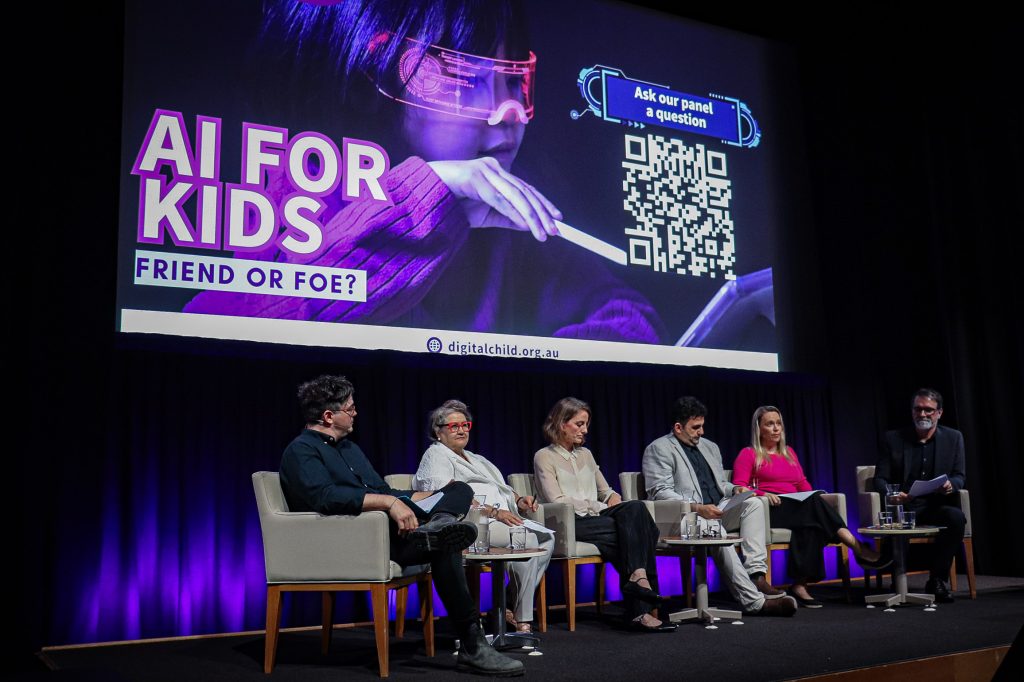
AI for Kids: Moving Beyond Fear and Hype
Presented by the Digital Child and supported by the State Library of Queensland.
We recently hosted an essential discussion exploring the complex question: Is Artificial Intelligence a friend or foe to children?
The central theme throughout the discussion was one of cautious optimism: AI holds immense potential for good, but its positive future for young people is not guaranteed—it requires intentional action now.
Panellists:
- John Livingstone, Digital Policy Lead, UNICEF Australia
- Natasha Banks, Program Director, Day for AI Australia
- Dr Hassan Khosravi, Associate Professor, University of Queensland
- Dr Kristy Corser, Research Fellow, Digital Child
- Distinguished Professor Susan Danby, Director, Digital Child
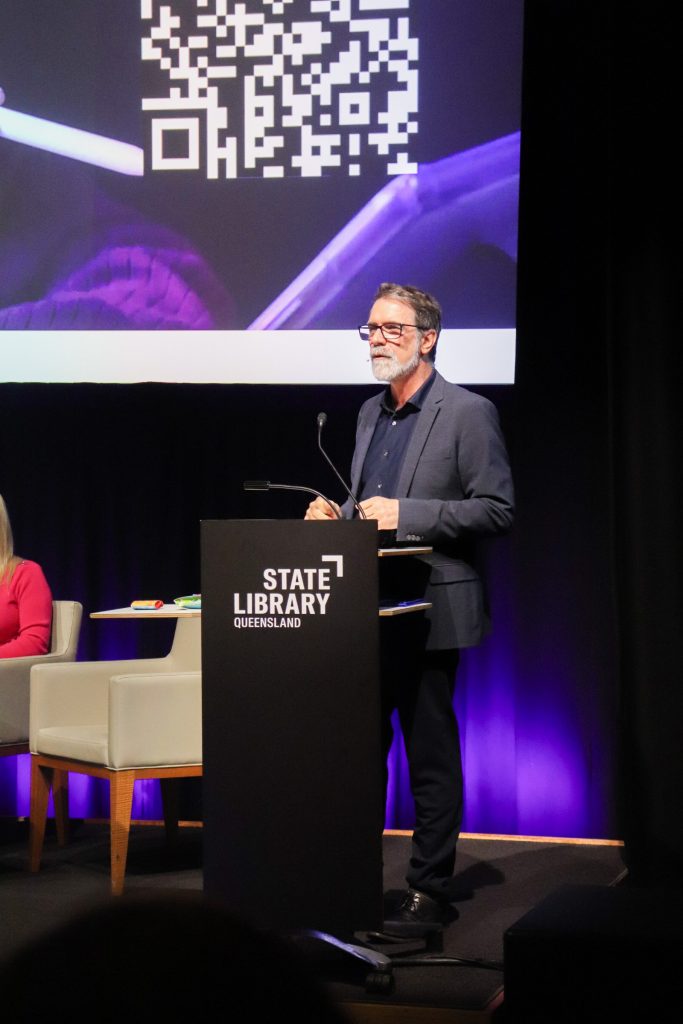
- Facilitator: Professor Michael Dezuanni, Digital Child
Key Takeaways from the Panel
The panel acknowledged the tension between the risk and the promise of AI for children, encouraging a shift in perspective. Instead of simply asking “friend or foe,” we should ask, “How do we make AI a friend?”
The Exciting Promise (AI as a Friend)
Empowerment and Problem-Solving: AI tools offer young people a hands-on opportunity to tackle real-world problems.
- A Journey, not a Threat: Children often don’t see AI as a separate technology. This presents an exciting journey for adults to “walk alongside these children… about what they’re experiencing” and how they’re making sense of it all.
- Equity and Personalisation in Learning: AI offers the chance to “level the playing field” through personalised learning and 24/7 learning companions that support engagement and deep thinking.
- Ethical Conversation Starters: Everyday AI devices provide wonderful opportunities for parents and educators to discuss moral and ethical questions with children.
The Critical Concerns (The Foe We Must Avoid)
- Misuse in Vulnerable Contexts: Tools not designed for therapeutic purposes, like generative AI chatbots, are being used by young people for sensitive issues like mental health support.
- The Rise of Parasocial Relationships: AI companions that mimic emotional connection can lead to one-sided relationships and contribute to challenging behaviours among teens.
- Enabling Image-Based Abuse: The ease with which deepfakes can be created is a serious emerging threat, enabling image-based abuse and causing significant harm in school and social settings.
A Call to Action on Design and Education
The solution involves bringing together three worlds: the science of learning, adaptive AI mechanisms, and a responsible, ethical, and equitable lens to ensure these systems are secure and fair.
Ultimately, the power to define AI’s role lies with us. By prioritising responsible design, promoting digital literacy, and engaging in proactive regulation, we can ensure AI serves as a powerful friend and ally in supporting the next generation.
Resources and the Full Session
- For more information and resources, you can visit the dedicated AI page here: digitalchild.org.au/artificialintelligence/
- The whole panel session is available to watch on YouTube here:

‘Australiana’ images made by AI are racist and full of tired cliches, new study shows
by Tama Leaver and Suzanne Srdarov

Beyond ChatGPT: The very near future of machine learning and early childhood
by Tama Leaver, Andrew Rohl, and Leon Straker
