
International Perspectives – Children’s Imaginative Experience of Facts
Written by Markéta Supa
Children’s imagination is almost exclusively discussed in relation to fiction. It is well established that children draw on fictional stories and characters when imagining possibilities, adopting perspectives, and exploring who they are and who they might become. But what about children’s imagination in relation to facts and information encountered through nonfiction media? Research and practice tend to focus on what children should know or do when engaging with information, both offline and online. By contrast, they rarely ask how facts and information become meaningful in children’s everyday lives. This overlooked question feels particularly important today, as many children have access to an unprecedented flow of information. In this context, it is often assumed that children are distracted by digital media and disengaged from information. However, our conversations with children in the ERC WONDRE project suggest a different story. For them, facts they found personally meaningful were not merely something to be acquired or judged; they were lived, felt, and imagined with.
Our research team invited children aged 9–11 to reflect on their factual interests (such as history, nature, technology, or fashion) in the home-based interviews and school-based focus groups. Using creative, tangible prompts, we asked open-ended questions about their everyday practices (for example playing, creating, and sharing), their thoughts (wondering and imagining), and their feelings (being scared or laughing). Importantly, we were careful not to impose any adult-constructed hierarchies on children that position certain media and practices as more legitimate than others — for instance, privileging print reading over online gaming. Such distinctions narrow how children understand and articulate their own authentic media experiences. Thus even when we zoomed in on informational reading and nonfiction picture books during certain parts of the discussions, we made it clear that all practices and media were equally valuable and worth talking about.
We are still in the early stages of this ERC project based at Charles University (Czechia), with more than three years ahead of us to make sense of what the children have told us and to share it with the world. This blog post offers just a glimpse of our emerging insights, focusing on how children imagine with facts that are personally meaningful to them — whether they encounter them through watching a YouTube video, reading an online post or a book, holding a historical artefact or natural object, listening to the radio, or chatting with parents and friends.
What is already becoming apparent is that children’s imaginative experience of facts is rich and diverse. A recurring feature of this experience is imaginatively wondering whether something could really be the case, whether it is even possible, and, if so, how something happens, looks, moves, or what it does. Kristýna, for example, described reading somewhere that an anaconda can stretch its jaws extremely wide and “just sort of stuff a whole goat or something inside”. She added that she was “just really, really amazed by it”. Similarly, when Artur learned that Nikola Tesla had invented a remotely controlled boat, he immediately began to imagine it in action, picturing what it might have done and how it could have been used. Alongside Kristýna and Artur, most children described lingering over such lived moments, turning them over in their minds as they engage with facts and information.
Some children also described placing themselves inside counterfactual realities. When thinking about animals, Nela spoke about imagining herself “as if I were in their skin”, while Antonín reflected on imagining“how terrible it must be, how the person must suffer” when bitten by a poisonous snake. Others regularly imagined how people experience extreme weather conditions or political conflict. For instance, Richard, who closely followed world events, tried to imagine situations he had learned about, such as earthquakes, placing himself inside them: “I can’t imagine it happening here… that I’d be somewhere in the rubble, trying to dig myself out”. Karin, as many other children, thought about the war in Ukraine, saying:“I’m interested in how refugees from Ukraine live here… I don’t really look it up anywhere, I just think about it.”
Children’s imaginings were at points challenged by new facts and information, as they described first picturing something in one way and later revising it with curiosity and even excitement. Daniel, for example, had long assumed that a nuclear power plant must be extremely complicated to understand, only to realise after watching a documentary that “it’s actually really simple.” Sometimes children described not only having imagined the world differently, but also reflecting on how their own thinking had changed, even imagining what it would be like if they had not corrected their earlier assumptions. Importantly, this was not about being wrong. There was pleasure in the shift, in seeing something anew and feeling their understanding expand, as Jana reflected: “I like it, because it makes me change my opinion”.
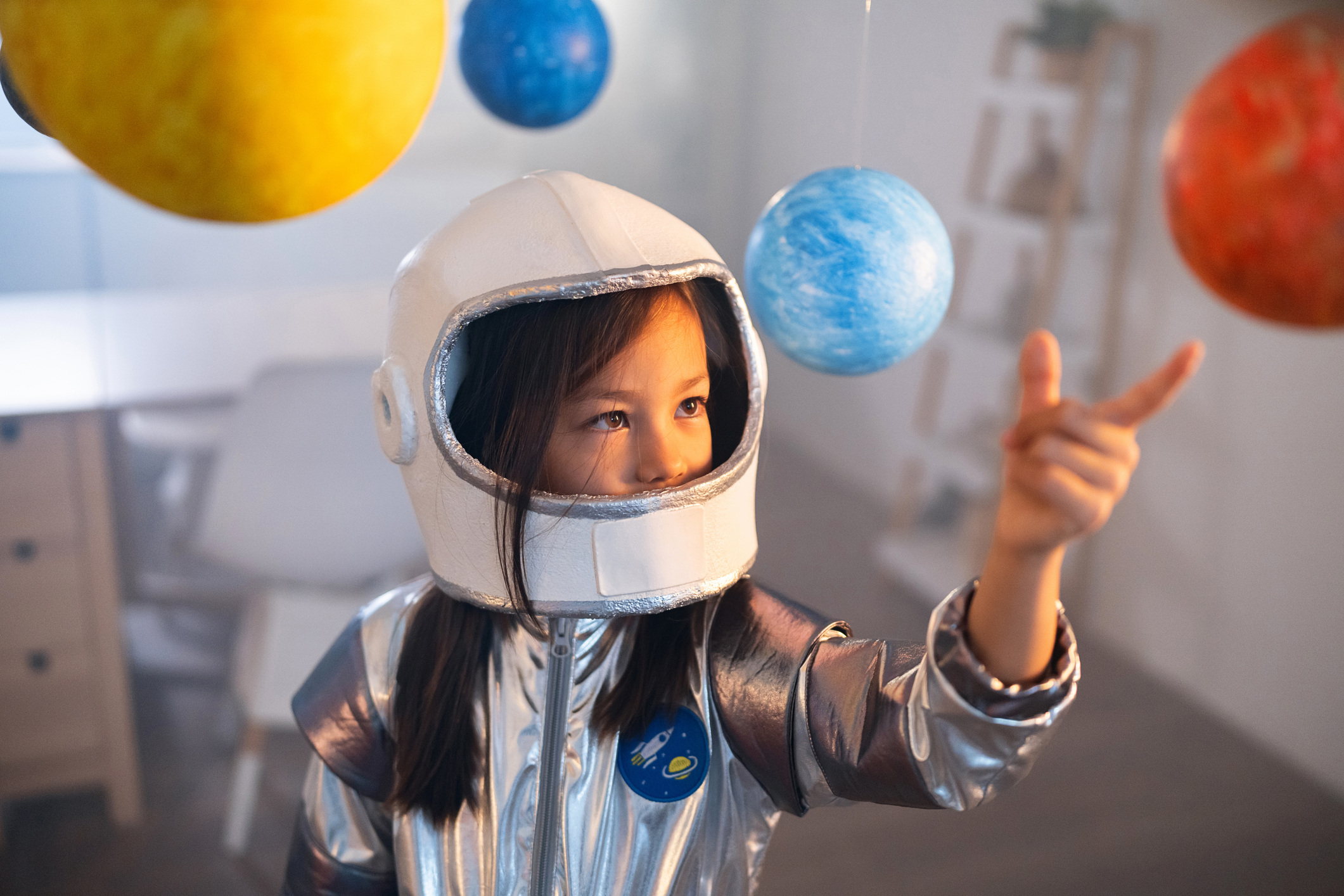
Moreover, children’s imaginative experience of information rarely remained abstract. It became woven into everyday life; into social interactions, conversations, practical activities, art, crafts, and play. Children described inventing sports and tournaments, drawing war scenes, adjusting recipes and trying out their own versions, constructing Lego factual worlds, or role-playing a spacecraft pilot, an architect, or a person living in past historical periods. Marta, for example, spoke about regularly playing fashion models with her friend, pulling out her entire wardrobe, and keeping numerous notebooks in which she designed outfits with annotated details. She read fashion magazines and watched online runway shows, then imagining before falling asleep what it would mean for her to become a model:“that maybe I wouldn’t be able to eat sweets so much and things like that.”
Our initial insights thus suggest that when children experience facts as interesting and meaningful, for whatever personal reason, then empathic, affective, and embodied imagining could be sparked, taking them on exploratory journeys. What is commonly considered typical of children’s engagement with fictional stories therefore appears to be no less true of their engagement with factual content. By believing that imagining belongs entirely to children’s engagement with fiction, are we marginalising children who imagine just as vividly with nonfiction media? By focusing on analytical and critical thinking that children are expected to perform when engaging with information, are we overlooking the complexity and diversity of their factual experience? Most importantly, what might this lack of attention to their unique experiences mean for diverse children? These are just some of the questions we are currently grappling with and that we hope to explore in greater depth in years to come. Meanwhile, we continue to reflect on how research across disciplines might become more attuned to children’s lived experiences of facts and information as they come to matter in their lives.
Looking for more content?
Our researchers and partners produce regular blog posts and research outputs focused on children and digital technology.