Augmented reality smartphone games may offer a new and surprisingly positive way to get young children moving outdoors
By Sarah Stearne, Amity Campbell and Leon Straker
Can screen time get children moving?
Most Australian children are not getting enough physical activity. Regular movement supports children’s physical health, social development and emotional wellbeing, yet for many families, finding ways to motivate children, particularly those who are not naturally drawn to sport or active play, can be challenging.
At the same time, smartphones and digital games are firmly part of childhood. So rather than asking, “How do we get children off screens?”, perhaps we can also ask, “Can we design screen experiences that get children moving?”.
Our recent research explored exactly this question.
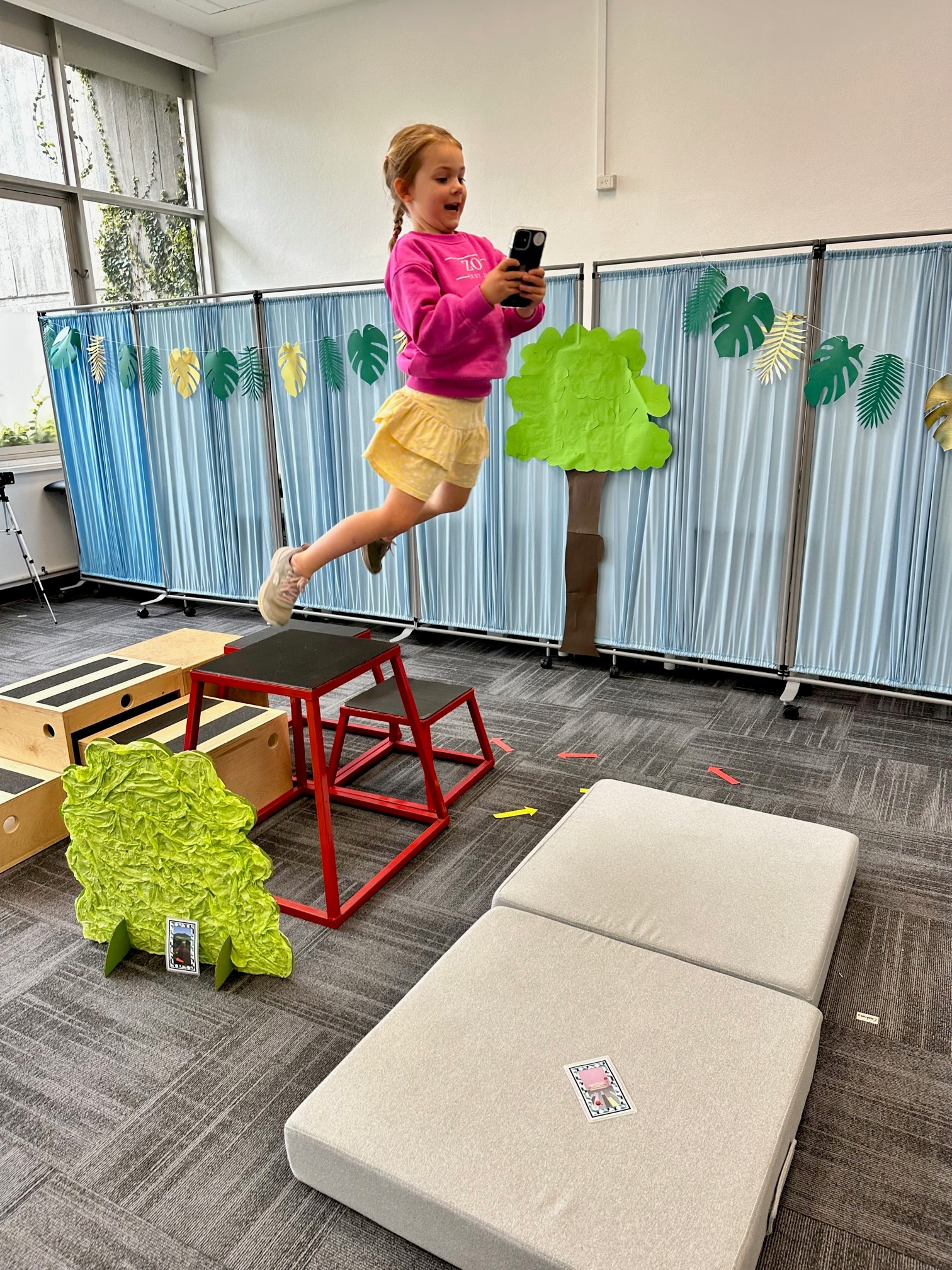
A different kind of screen time
We explored the potential benefits and risks of this type of AR game for young children. Specifically, we were interested in whether this kind of game could:
- encourage movement
- keep children engaged
- be enjoyable
- cause negative side-effects such as motion sickness
- affect feelings of social connection with friends
- increase the number of trips, bumps, falls and loss of balance
What did we find?
The results were encouraging.
- Children were physically active. Despite holding a smartphone, children ran, walked, climbed and crawled through tunnels in search of AR animals.
- Engagement was higher. Children played the AR game for longer than when they searched for traditional toy animals.
- Enjoyment was greater. Children reported more enjoyment during the AR game compared to the traditional toy activity.
- Safety was not compromised. Children did not trip, bump into objects, lose their balance, or fall any more often during the AR game than during the plastic toy based activity.
- Almost no motion sickness was reported.
- Social interaction remained strong. Children continued to interact with their peers and felt socially connected while playing the AR game.
Why this matters
The majority of Australian children are not meeting recommended physical activity guidelines. While organised sport, structured exercise and outdoor free play remain important, these approaches do not engage every child equally.
Some children may:
- lack confidence in sporting environments
- prefer imaginative or digital play
- find traditional team settings challenging
- face barriers related to cost or scheduling of organised sport
Augmented reality may offer an alternative pathway into movement. By combining imagination, technology, physical exploration and interaction with the environment, AR games may have the potential to bridge the gap between children’s love of digital experiences and their need for physical activity. Rather than replacing outdoor play (as many digital technologies have been criticised for doing), AR may instead encourage and enhance it.
From controlled settings to real-world play
Our study was conducted in a controlled environment, which was an important first step in examining safety, engagement and feasibility. Given the positive findings, AR smartphone games appear to be a promising tool worth exploring further in real-world outdoor settings such as playgrounds and natural spaces. Future research will need to examine how children use AR games in open environments, whether physical activity and engagement remain high over time, and how social interactions unfold when more children are involved.
A balanced view
This research does not suggest that all children should only do outdoor play with AR. Instead, it highlights an important shift in thinking: not all screen experiences are equal.
Well-designed augmented reality experiences may:
- motivate children to move and be active
- encourage outdoor exploration
- support physical movement
- maintain social connection
- offer an engaging option for children who are less naturally active
For families navigating the digital landscape, this research opens up new possibilities. Technology does not always have to compete with physical activity, when thoughtfully designed, it may help promote it. As parents continue to look for creative ways to support children’s health and wellbeing, augmented reality smartphone games may represent an innovative and promising piece of the puzzle.
Related Articles
Can motion sensors accurately measure postures and movements among children?
by Charlotte Lund Rasmussen, Leon Straker, Amber Beynon, Amity Campbell
Smartwatch activity trackers for young children: What do parents think?
by Ray Davey, Amity Campbell, Amber Beynon, Charlotte Lund Rasmussen, Danica Hendry, Sarah Stearne, Courtenay Harris, Leon Straker, Juliana Zabatiero